Why full automation fails in field service — and where the human still has to be in the loop
Ali Gauhar · Automation · July 11, 2026 · 2 min read
Field service isn't e-commerce. A missed call, a reminder, a data entry step — those can run fully automated with zero risk. But a pricing exception, a scheduling conflict, an upset customer — those need judgment a bot doesn't have. Most automation setups get this split wrong in one direction or the other.
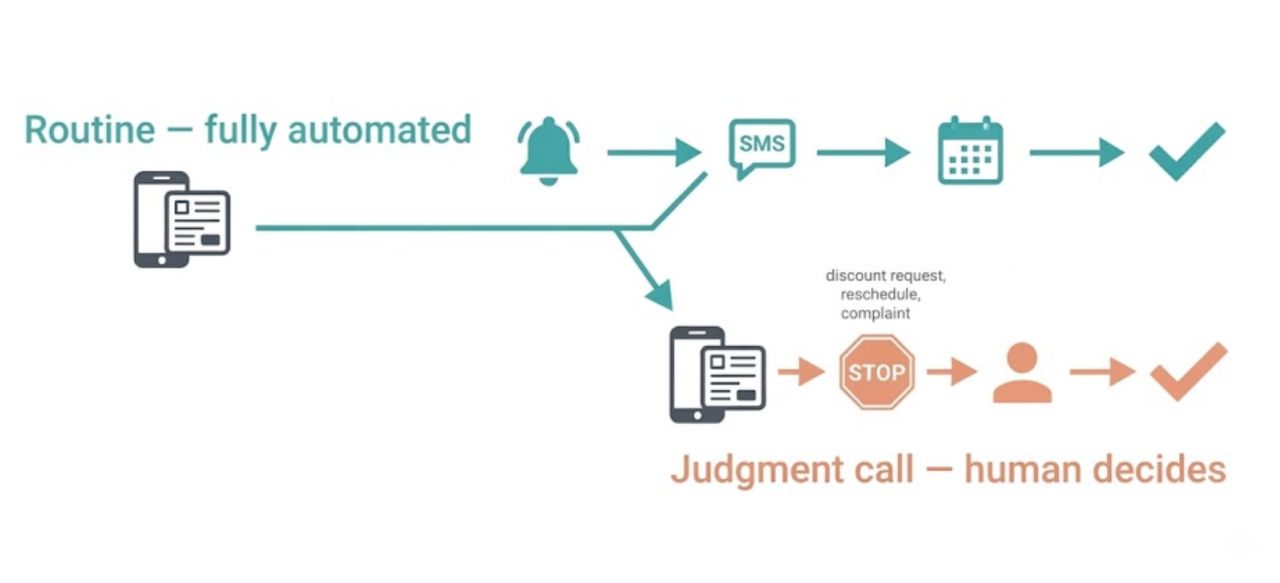
Job request comes in → routine step? → yes: automate fully (notify, SMS, book) → no: flag + route to a person → human decides
Automate the routine, route the judgment calls
The mistake most automation setups make is treating every step the same way. Either everything gets automated, including the parts that need a human, and customers feel handled by a machine. Or nothing gets automated because someone's worried about the judgment calls, and the team drowns in repetitive work that never needed a person in the first place.
The actual split is simpler than it looks. Routine, repeatable, no-judgment steps — automate fully. Missed-call text-back, appointment reminders, lead capture, data logging. No reason a human needs to be in that loop.
Anything with a real decision — should this customer get a discount, can this job be rescheduled without losing the slot, how do we handle a complaint — that's where automation should prep the information and hand it to a person, not make the call itself. The bot gathers context, flags it, routes it. The human decides.
Get that split right and automation feels invisible where it should be invisible, and personal where it needs to be personal. Get it wrong in either direction, and it either feels robotic or it never actually saves anyone time.